DANI ALONSO OPTICALFIBER ADAPTERS Technical Inquiry

Fiber Optic Cable Termination and Connector Solution

Fiber optic cable termination involves attaching connectors to fiber ends to enable precise, low-loss connections, with common types including SC, LC, ST, FC, and MPO/MTP.Overview of Fiber Termination

Fiber optic termination is the process of preparing the end of a fiber optic cable to connect to another fiber, device, or network equipment. Proper termination ensures optimal performance, minimal signal loss, and mechanical durability. Terminations can be permanent (splicing) or removable (connectors). Connectors allow for easy connection and disconnection, making them ideal for data centers, telecom networks, and environments requiring frequent reconfiguration, while splicing provides the lowest signal loss for long-distance or high-bandwidth applications .

Key Components of Fiber Connectors
  • Ferrule: A cylindrical component that aligns the fiber cores precisely during mating. Typically made of ceramic for durability and optical compatibility .
  • Connector Body: Protects the ferrule and provides a secure interface for mating.
  • Fiber Face: The polished end of the fiber that contacts the mating fiber, critical for minimizing reflection and insertion loss.
  • Spring Mechanism: Many connectors are spring-loaded to maintain consistent contact pressure between fiber faces .
Common Connector Types
  1. SC (Subscriber Connector): Square body with push-pull coupling, widely used in FTTH and telecom. Offers stable engagement and compatibility with both single-mode and multimode fibers .
  2. LC (Lucent Connector): Miniaturized version of SC with a 1.25 mm ferrule, ideal for high-density applications. Uses a latch mechanism similar to RJ45 .
  3. ST (Straight Tip): Bayonet-style connector, commonly used in legacy networks and multimode applications.
  4. FC (Ferrule Connector): Screw-on type, often used in single-mode applications requiring high precision.
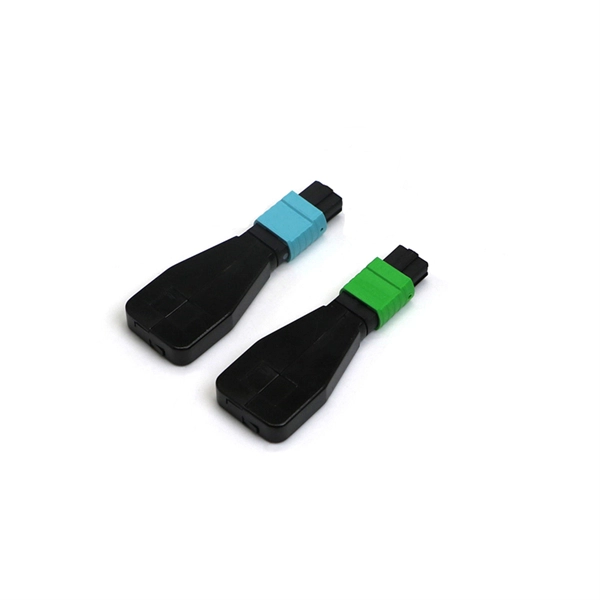
  5. MPO/MTP (Multi-Fiber Push On): High-density connectors capable of connecting multiple fibers simultaneously, commonly used in data centers and industrial environments. Uses guide pins for precise alignment and supports ribbon cables for high-speed networks .
Single-Mode vs. Multimode Termination
  • Single-Mode: Requires precise alignment and polishing, often using factory-made pigtails or splice-on connectors. High care is needed to minimize insertion loss and reflectance .
  • Multimode: Easier to terminate in the field using direct connector installation on tight-buffered fibers. Less sensitive to alignment than single-mode .
Performance Considerations
  • Insertion Loss: Light lost when connecting fibers; lower values indicate better performance.
  • Return Loss: Light reflected back toward the source; higher values indicate better performance.
  • Durability: Connector design and materials affect mechanical strength and longevity.
  • Environmental Protection: Outdoor or industrial installations may require ruggedized or expanded-beam connectors to resist dirt and contamination .
Applications

Fiber connectors are used in telecommunications, data centers, industrial networks, and FTTH deployments. The choice of connector depends on fiber type, transmission speed, connection distance, and network density. High-density MPO/MTP connectors are preferred for large-scale, high-bandwidth networks, while SC and LC connectors are common in structured cabling and patch panels . In summary, understanding fiber optic termination and connector types is essential for designing reliable, high-performance networks. Selecting the right connector ensures low signal loss, mechanical stability, and compatibility with existing infrastructure.

Fiber Optic Cable Termination and Connector Solution

How To Terminate Fiber Optic Cable: Connectors & Splicing

Learn how to terminate fiber optic cable using mechanical connectors or fusion splicing. We cover the tools, cleaning,

Everything you need to know about fiber optic termination

We terminate fiber optic cable with connectors that can mate two fibers to create a temporary joint and

Understanding Fiber Termination Techniques: Splicing vs. Connectors

Fiber optic networks are the backbone of modern communication systems, enabling high-speed data transfer and

Everything you need to know about fiber optic termination

Fiber Optic Termination Tutorial We terminate fiber optic cable two ways - with connectors that can mate

Types of Fiber Optic Cable Connectors and Their Uses

For example, single-mode fiber connectors and multimode fiber connectors each pair with the cable with the same mode

Fiber Optic

Welcome to our Fiber Optic Termination Kits landing page, featuring the UniCam High-Performance Tool Kit (TKT-UNICAM-PFC)

Fiber Optic Cable Termination Guide | Fusion & Mechanical

Learn fiber optic cable termination methods including fusion splicing and mechanical connectors, tools, steps, and best practices for

Fiber Optic Connectors

UniCam® Fiber Optic Connectors Corning UniCam® high-performance fiber optic connectors offer best-in-class optical performance

Fiber Optic Connector Types: A Beginners Guide

The fiber connector types, sometimes referred to as terminations, link fiber optic cables together through terminals,

The FOA Reference For Fiber Optics

Choosing a connector type for any installation should consider if the connector is compatible with the systems planned to utilize the

Which Fiber Termination Method is Right for You?

The good news is that as part of our comprehensive line of fiber optic solutions, Cables Plus offers everything you

FOA Lesson Plan: #7, Terminations and Splices

Fiber optic joints or terminations are made two ways: 1) connectors that mate two fibers to create a temporary joint, patch between

Understanding Fiber Termination Techniques: Splicing vs. Connectors

Method 2: Fiber Connectors Fiber connectors provide a removable and reusable connection point for fiber optic

Fiber Optic Termination and Inspection Tools, Kits, and

Fiber optic tools and accessories. Complete kits for fiber optic cable assembly, termination, polishing,

Fiber Optic Connector Types Explained | FiberCablesDirect

Also called terminations, these connectors hold a connection between two fiber cables. Because there are many different

The next generation of on-site fiber-optic termination options

Additionally, the next generation of field termination options is an excellent choice for upgrading or “cleaning up” a

Shop for Fiber Optic Terminating Kits Online

Our kits provide all the essentials for seamless termination of fiber optic cables with ST, SC, FC, or LC ends, ensuring compatibility

The FOA Reference For Fiber Optics

Fiber optic joints or terminations - where cables are terminated - are made two ways: 1) connectors that mate two fibers to create a

Related Video Reference

This video was associated with the source search result. Verify technical details against current product documentation and project requirements.

Technical note

This reference is intended for preliminary fiber optic adapter research. Compatibility, link budgets, connector interfaces, sleeve materials, polish, installation methods, test limits and applicable standards must be verified for the specific project.

Still Have a Technical Question?

Use the inquiry form to describe an adapter requirement, connector interface or testing question.

Start an Inquiry