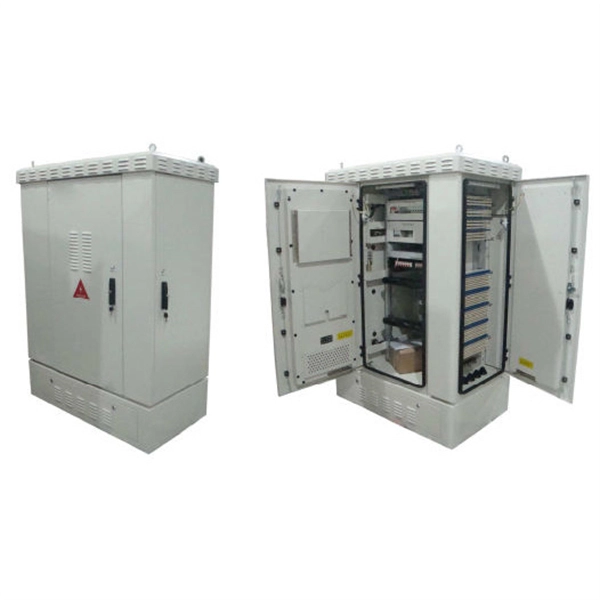
The primary terminal types in distribution automation are FTU (Feeder Terminal Unit), DTU (Distribution Terminal Unit), and TTU (Transformer Terminal Unit), each serving distinct monitoring and control roles within the grid.Overview of Terminal Types
1. Feeder Terminal Unit (FTU) The FTU is typically installed on overhead line poles and connects directly to pole-mounted circuit breakers or load switches. Its main function is to monitor line current and voltage and to trip switches rapidly in response to short-circuits or ground faults, emphasizing millisecond-level decision-making to prevent fault propagation. FTUs are designed for speed and decisiveness, often housed in stainless steel enclosures to withstand harsh environmental conditions such as extreme temperatures, rain, and sun exposure . 2. Distribution Terminal Unit (DTU) DTUs are deployed in indoor environments or box-type substations, such as Ring Main Units (RMUs) and switching stations. Unlike FTUs, DTUs provide multi-circuit monitoring, capable of accessing current and voltage signals from multiple circuits simultaneously. They act as local dispatch centers, aggregating data from the distribution station and transmitting it to the master station via fiber optics or cellular networks (4G/5G). DTUs are larger, with expansion slots for communication modules and backup power supplies, supporting centralized control and data collection . 3. Transformer Terminal Unit (TTU) TTUs are installed near distribution transformers, focusing on the low-voltage side. They monitor transformer operating status, including oil temperature, three-phase current, voltage, and power factor. TTUs provide refined management, supplying data for line loss calculations, transformer overload warnings, and power quality analysis. Modern TTUs may also integrate low-voltage branch monitoring and distributed energy resource (DER) detection, such as photovoltaic systems .
Functional Role in Distribution Automation
These terminals collectively form the backbone of Remote Terminal Units (RTUs) in DA systems. They enable:
- Fault Location, Isolation, and Service Restoration (FLISR)
- Volt/VAR control for voltage and reactive power management
- Direct Transfer Trip between substations and feeder sites
- Predictive maintenance by monitoring transformers and other field devices By combining telemetry, local control logic, and communication capabilities, these terminals act as active nodes in the grid, supporting real-time decision-making and improving reliability, operational efficiency, and grid resilience .
Integration and Communication
Modern DA terminals are integrated into Smart Grid Field Area Networks (FANs) and utility WANs, using wired, wireless, and cellular technologies. They support secure, scalable, and cost-effective connectivity, often leveraging VPNs, encryption, and zero-touch deployment tools. This ensures reliable communication from the control center to the edge devices, enabling large-scale DA deployments and advanced grid management .
Summary
- FTU: Pole-mounted, fast fault detection and tripping.
- DTU: Substation-based, multi-circuit monitoring, local dispatch.
- TTU: Transformer-adjacent, low-voltage monitoring, refined management. These terminal types are essential for modern distribution automation, enabling real-time monitoring, fault management, and integration of distributed energy resources, forming the foundation of a resilient and intelligent electricity distribution network .